
Frederick City Directory Shelves
Frederick's directory record is scattered, not annual. The trail runs through a few named holdings. The Maryland State Archives holds Boyd's 1875 business directory on microfilm. Later Polk volumes appear in a City of Frederick and Maryland Historical Trust property report. The C. Burr Artz Library Maryland Room is the local starting point for printed volumes. Heritage Frederick adds an appointment archive. It covers property, family, organization, and newspaper research. Cite each volume's year and publisher, since a gap may mean a missing shelf, a year with no publication, or a repository-access limit.
| Collection | Verified years | Where held | How to use it |
|---|---|---|---|
| Boyd's Maryland business directory | 1875 | Maryland State Archives, SC 2779 microfilm | Business names and occupations, not a full household roll |
| Polk's Frederick directories | 1935, 1950, 1960 | Maryland Room; Heritage Frederick is identified for the 1960 volume | Specific cited entries and local context |
| Polk city-directory shelf | Selected 1971-2015 run | Maryland Room | Check each year and any street section before relying on continuity |
| Frederick City Directory | 1967 | Maryland State Archives, BRG29-10-65 | State archival holding |
| The Citizen newspaper | 1895-1923 | Maryland State Archives, FCPL, and Heritage Frederick holdings | Follow address changes, notices, and civic roles |
No official year-by-year inventory exists. No Frederick reverse or criss-cross series exists either. Ask the Maryland Room or Heritage Frederick about a specific title, year, and street section instead of assuming a full run.
Boyd's 1875 Frederick Directory
Boyd's 1875 Business Directory of Maryland is the anchor. The state archives holds it as SC 2779 microfilm. The volume covered business firms in Frederick and other Maryland cities. That focus matters. A firm listing links a person, occupation, and commercial address. It does not prove that every Frederick household appeared. It shines when a family story involves a shop, trade, or office, and later Polk volumes or newspaper notices can bridge the address.
A solid citation records the title, year, microfilm collection, page, spelling, and the exact line. Then weigh it against deeds, probate, or later directories. Frederick County dates to 1748. Older land or estate records may carry a different town label, tract name, or boundary than the directory heading. Note: A directory omission signals a coverage or spelling problem, not proof a person was absent from Frederick.
The Maryland State Archives city-directory guide identifies the Frederick material behind this early route. Start there. The same volume also lists firms from other Maryland cities, so keep the page context with your copy.
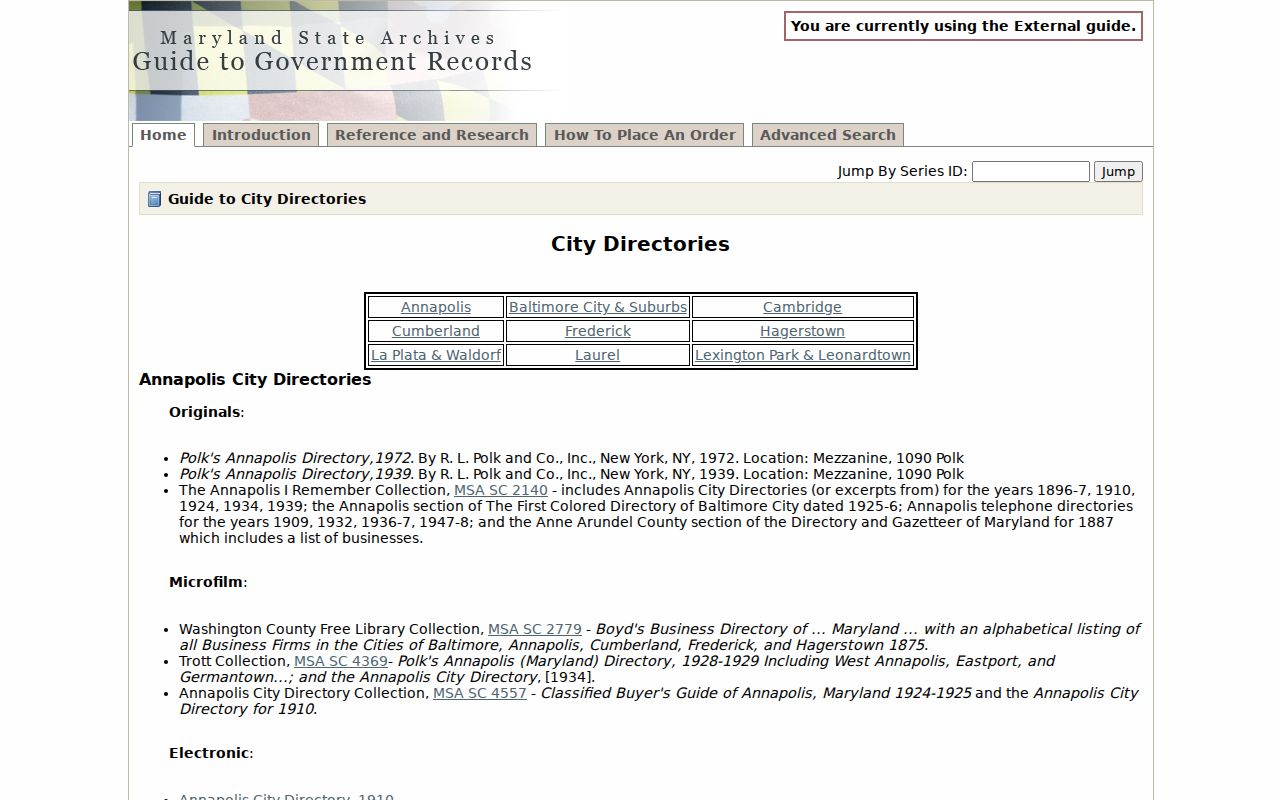
Boyd's sits on microfilm, so note the collection identifier. Preserve the access method with every Frederick directory result.
Frederick City Directories at Maryland Room
The FCPL Maryland Room sits inside the C. Burr Artz Public Library at 110 East Patrick Street. The collection does not circulate. It concentrates on Frederick County and City history, genealogy, maps, newspapers, yearbooks, and directory material. Posted hours run Tuesday through Thursday, 10 a.m. to 7 p.m., Friday, 10 a.m. to 5 p.m., and Saturday, noon to 5 p.m. The listed phone is 301-600-1368. Call first. Confirm current hours and the exact volume you need. Some genealogy databases work only at library computer stations, so a card does not guarantee remote access.
The finding aids reach past surnames. MR14 covers biographical material. MR29 holds school and education sources, MR33 the South End Civic Association minutes, and MR36 M.J. Grove Lime Company material. MR38 covers NAACP-related material and MR41 WFMD radio material. These labels are search hooks rather than proof of online indexing, but they can tie a directory line to a school, civic group, or local institution.
The FCPL Maryland Room page presents the collection and its access details. Start there.
The Maryland Room settles the printed record. It confirms a year, shows front matter, and points to related newspapers or yearbooks.
Heritage Frederick File Research
Heritage Frederick's Research Center at 24 East Church Street works on an appointment basis. It suits a question already narrowed to a street, parcel, former owner, or rough date. The organization's own material describes more than 1,000 local files. Manuscripts, photographs, ephemera, newspapers, and family and organization records round out the holdings. A keyword catalog helps you search them. Staff assistance costs $25 per hour, and photocopies run $0.50 per page. Scheduling the appointment itself carries no stated charge. Confirm current services and fees before you rely on them.
Come prepared. Bring the address and any spelling variants. Add a deed reference and the directory year that produced your lead. Staff can then connect a property file, historic-survey material, a photograph, a clipping, or a later directory line to your search. The Digital History Library adds more depth. It holds the Jacob Engelbrecht diary, the Delaplaine family history, pre-1800s house volumes, downtown history, and community image galleries. These sources give context when a formal entry is thin. They cannot turn an old listing into a current-address claim.
The Heritage Frederick Research Center provides the appointment and catalog route for this work.
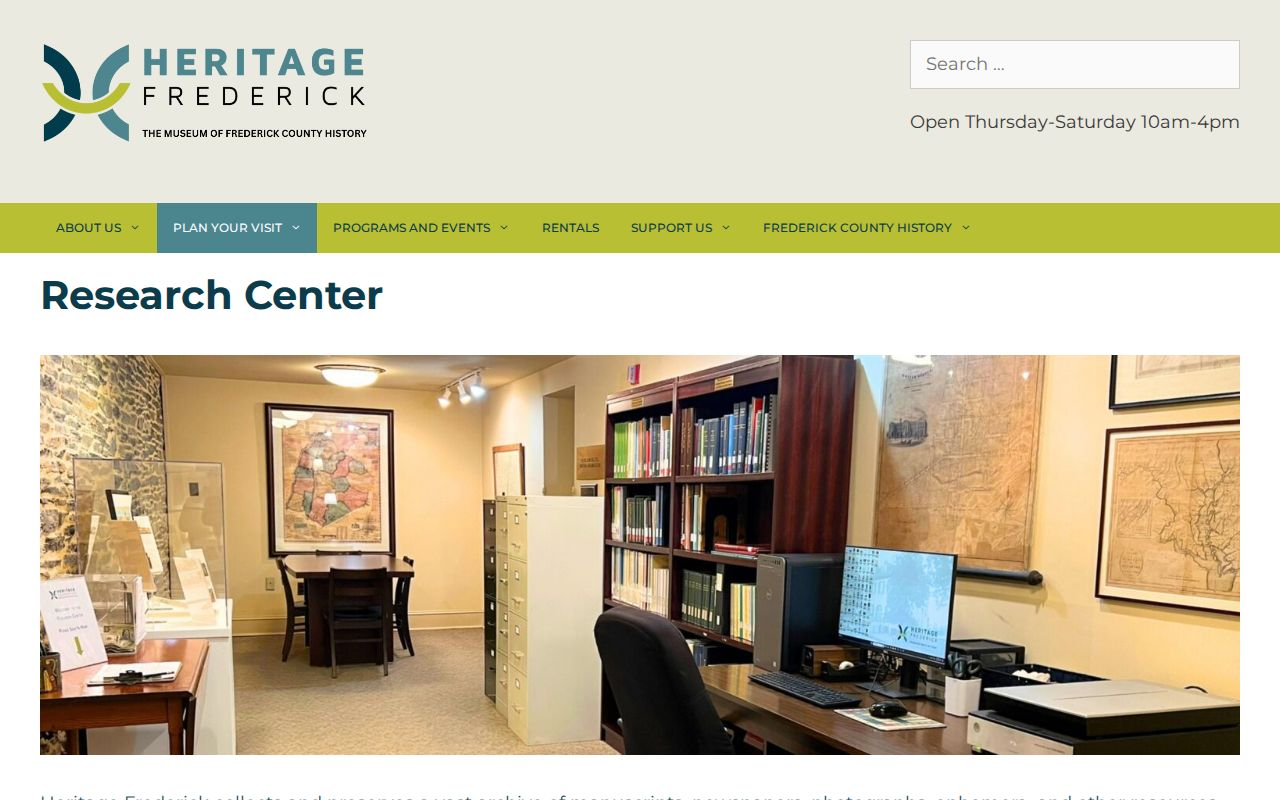
File research pays off late in the hunt. It works best once a directory, map, or deed has pinned down a person or property.
Reading a Frederick City Directory Entry
Read every entry with the volume's purpose in mind. A directory line is a record tied to its own date. The City and Maryland Historical Trust property report shows how Polk entries tie people and firms to Frederick addresses. Its 1935 citation places Robert F. Nicodemus at 512 Elm Street. Its 1950 citation names officers of A.W. Nicodemus, Inc. The report reproduces neither a full page nor a local abbreviation key. So never guess what a mark means. Photograph or note the front matter from the actual volume first.
| Indexed name | Copy the surname, given name, initials, and spelling as printed. |
|---|---|
| Relationship notation | Record a spouse or other relationship only when the volume prints it. |
| Occupation or firm | Note the listed work, company, office, or business address as a period clue. |
| Address line | Keep the street number and spelling; it may be a residence, office, or business location. |
| Status notation | Preserve any printed home, rooming, widow, or other status mark with the volume's own key. |
- Criss-cross directory
- A directory section arranged by street and number rather than surname, if a particular volume includes one.
- Householder index
- A name-oriented index that identifies the person recorded for a household or address in that publication.
- Abbreviation key
- The volume's own explanation of shortened labels and marks, usually near its front matter; preserve it before drawing conclusions.
420 East Patrick Directory Trail
The City and Maryland Historical Trust report for 420 East Patrick Street shows why a directory entry works best in company. It links a 1928 A.W. Nicodemus ice-cream plant to a 1930 Sanborn and Polk pairing. Then it records selected later lines for the same address. County Board of Education and Bill & Earl's Automatic Transmission Service appear in 1971/72. Direct Factory Outlet and the transmission service share the listing in 1977. Direct Factory Outlet continues through selected directories from 1983 to 1999. The report lists multiple offices in 2001, then Potomac Medical and Religious Coalition in 2006. Several offices appear in 2010. EBA Enterprises, Gateway Funding, and Serenity Treatment Center round out 2015.
That sequence documents one property packet. It is not every address in Frederick County. Its value is the method. Match the map's building and use with a directory's occupant or business line. Then check land records, a property file, or a permit file. A shift from household use to business use needs separate verification. An address can stay put. Its occupants, use, ownership, and municipal record custodian may all change.
The Maryland State Archives Sanborn index supplies the historic-map layer that gives directory findings physical context.
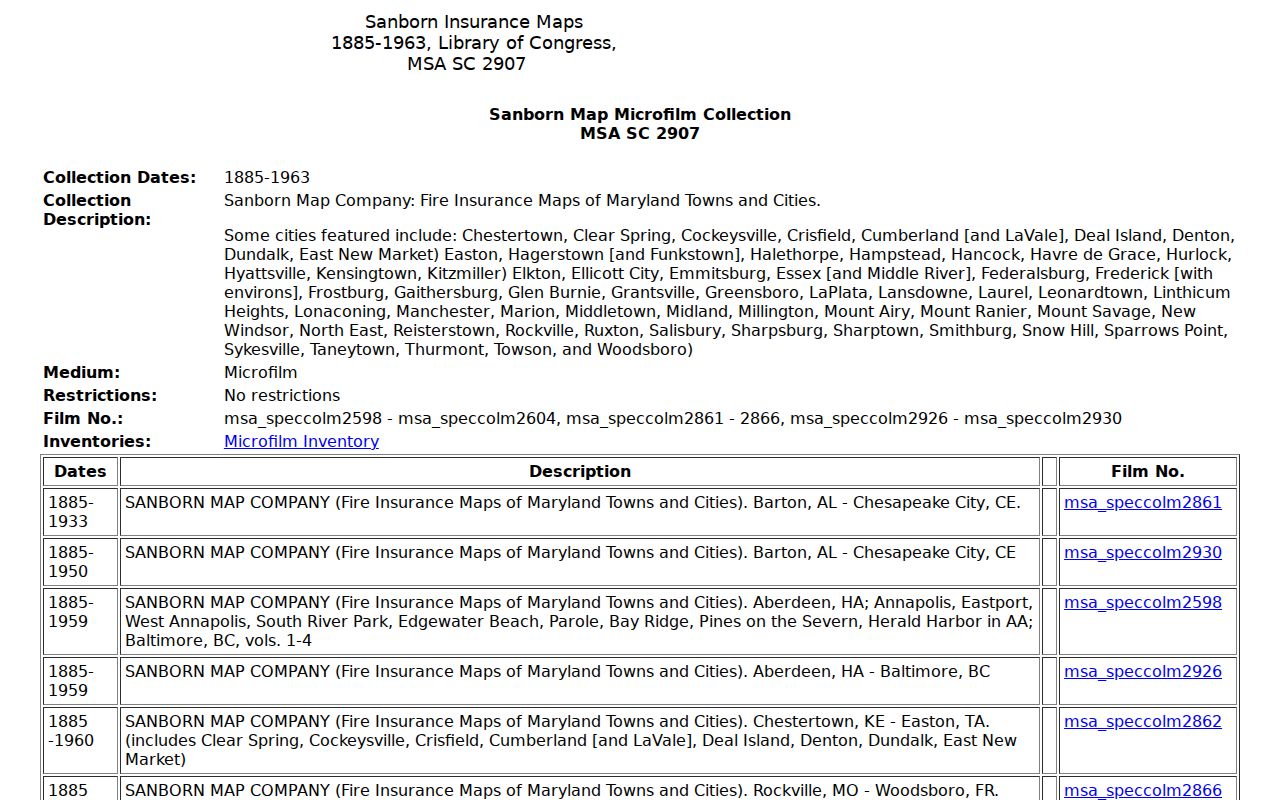
Sanborn material captures a building's footprint, construction, use, and neighbors at the map date. It is not a complete roster of people.
Frederick Sanborn Directory Context
Directory years earn their value when matched to the building at the address. The Maryland State Archives Sanborn index covers Frederick maps from 1885 through 1963. The Library of Congress holds a public-domain 1922 Frederick set of 34 sheets. The City and Maryland Historical Trust report also cites 1930 maps. Updates came in 1947, 1948, 1961, and 1964. The set was corrected to 1971. A sheet can show footprint, construction material, stories, use, outbuildings, and nearby structures. A complete name list is rare. Pair the map date with a directory year, deed, newspaper, or census entry. That pairing grounds any conclusion about a person or place.
This context helps most when a directory switches formats. That means a shift from a personal line to a business or office listing. It can flag a building change or a new use at the same address. It does not pretend the map names every resident.
Tracing Frederick City Directories
Trace a household with repeatable notes, not memory. Start in a confirmed volume and work the street section before the alphabetical section. Search spelling variants, abbreviated street suffixes, old numbering, and a spouse's surname. Pair entries with the correct municipality or ward. A historical directory heading, a modern ZIP, and a county boundary can describe different geographies. The federal decennial census becomes public after 72 years. The latest full census now open is 1950. And remember that a directory year is not a move-in date. Entries may have been collected before publication.
- Find the earliest verified directory entry and record the publisher, year, page, name spelling, address, and listed role.
- Move through later available volumes, recording each address, occupation, firm, relationship notation, and any change in spelling.
- Check a street or criss-cross section only when that volume has one, then record nearby entries as leads rather than assumed relatives.
- Pair the local line with the nearest released census, deed, newspaper, probate, church, cemetery, or archival reference.
- When the trail disappears, verify the next volume and variant spellings before treating a move, death, or omission as an explanation.
After a historic find, a modern address-keyed check can follow the Frederick street directory, which tracks the current parcel and street-record path. Note: Cite historical sources by year, and never present a past connection as proof of a present household.